
We bridge precipitation science and real-world hydrologic needs to deliver uncertainty-aware extremes for flood and infrastructure relevant decisions.
Thrust 1: Radar QPE and Radar Observing Systems
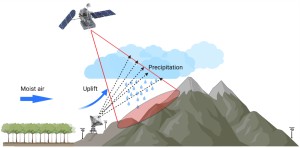
Retrieve (SCOP-ME, X-band dual polarization retrieval) and evaluate radar-based QPE specifically for hydrological applications.
- Representing uncertainty in a way that is most useful for hydrologic modeling
- Radar QPE errors and how they are influenced by regimes
- Retrieval choices and its impact on hydrologic error at basin scale
Thrust 2: Uncertainty Characterization
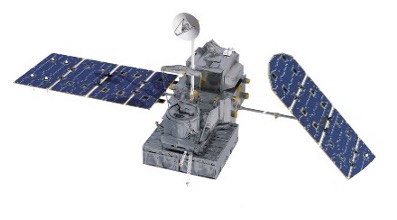
Quantify and characterize precipitation uncertainty in satellite and radar QPE
- How do errors depend on terrain, storm type, season, and large scale atmospheric parameters?
- How can we express uncertainty so that it is meaningful for hydrologic modeling?
- How does uncertainty in extremes propagate into return levels/design metrics?
- How do extremes cluster in space/time, and what does that mean for hazard estimation?
Thrust 3: Stochastic Rainfall Generation, Ensembles, and Downscaling
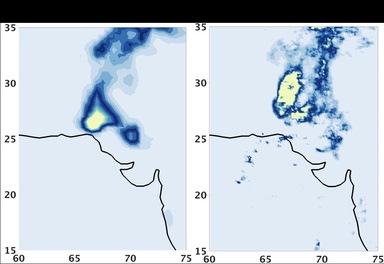
Generate QPE and QPF ensembles which preserves realistic space–time structure and extremes
- How to preserve spatial dependence and temporal coherence while generating ensembles?
- How do we handle phase/timing errors in QPFs?
- When does downscaling improve decision-relevant skills?
Thrust 4: Hazard Applications
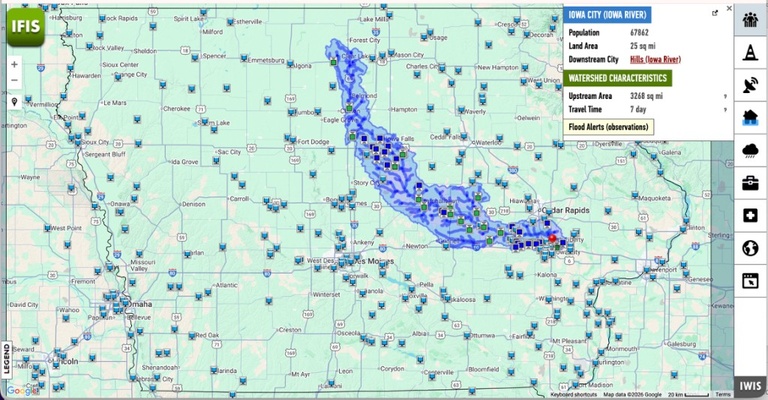
Translate precipitation science into hazard-relevant metrics and workflows
- Probabilistic precipitation inputs for hydrologic modeling and threshold exceedance analysis
- Event-based evaluation tied to flood-relevant outcomes (timing tolerance, intensity-duration relevance)
- Uncertainty on design metrics rather than single deterministic numbers
- Data-driven emulators that reproduce CPM-like skill and generate large ensembles